%20(1)_edited.jpg)


Because I Love You, I Get the Least of You Love, Truth, and Relationships in the Black Community

Nikki Giovanni and James Baldwin on love beyond survival

A Conversation That Still Resonates
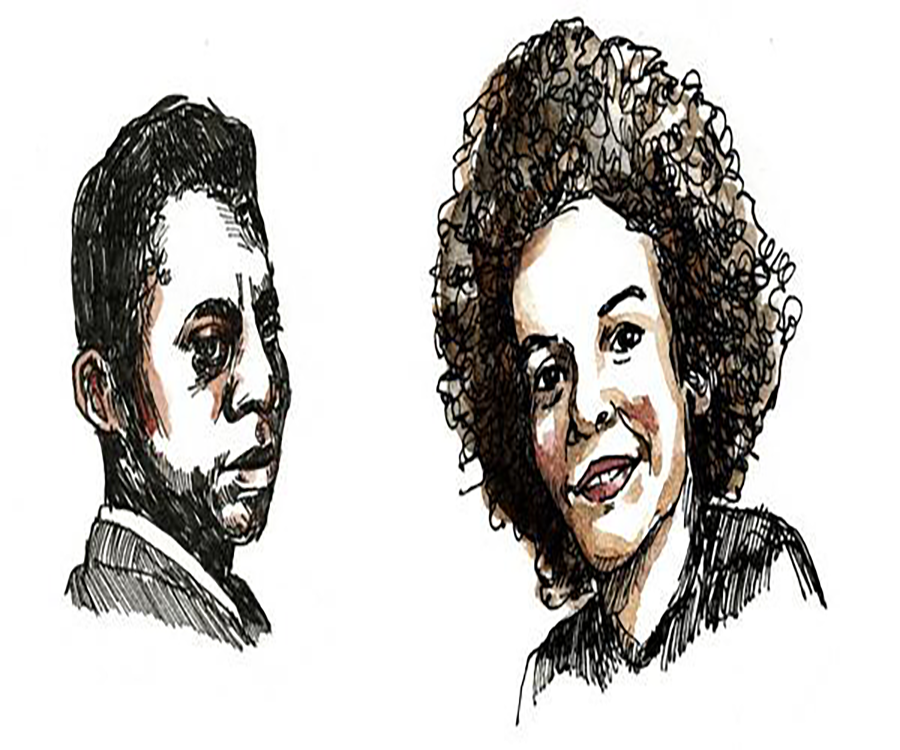
In 1971, James Baldwin and Nikki Giovanni sat across from each other for a public conversation in London that was as intimate as it was candid. Televised but deeply personal, their dialogue drew viewers into the inner workings of Black life, exploring race, gender, responsibility, and love with a level of honesty rarely seen on public platforms at the time. It was not a staged discussion for appearances; it was a reckoning — a rare moment where the external forces shaping Black existence — systemic oppression, societal expectation, economic limitations, and cultural scrutiny — were connected directly to the tender, often fraught, dynamics of intimacy. Baldwin and Giovanni were not speaking abstractly. They were naming the daily pressures that infiltrate homes, relationships, and families, the ways love must coexist with survival, and the quiet compromises often made in private spaces.
Giovanni’s words remain among the most piercing in that conversation:
“Because I love you, I get the least of you.”
This statement endures because it names a painful, universal truth in many Black relationships: the people we love most — those for whom we would sacrifice and endure — often inherit the least of our time, attention, and emotional labor. It is a critique of imbalance, yes, but also a profound call for accountability, presence, and reciprocity. In this line, Giovanni encapsulates the tension between love and survival, between devotion to family and self, between giving to the world and giving to the ones who matter most. It is a truth that resonates across generations, echoing in the lived experiences of families, in cultural narratives, and in the modern stories of intimacy in the Black community.
By framing love as both moral and radical, Baldwin and Giovanni challenged viewers to confront the cost of withholding presence from those we hold dear. They asked us to consider: what happens when the world demands the best of us, but those we love receive only remnants? And conversely, what power exists when love is fully given — undivided, intentional, and ethical — even in the face of societal oppression?
Historical Context: Love Under Siege

To understand the weight of Giovanni’s statement, it helps to consider the historical pressures on Black love. From slavery to segregation to modern systemic inequities, African American families have been forced to navigate external violence and internal strain simultaneously. Families were torn apart by the slave trade. Segregation limited economic opportunity and social mobility. Policing, mass incarceration, and economic precarity continue to place enormous stress on Black households today.
These external pressures seep into homes and intimate relationships. Baldwin described the effect of American society on Black men: humiliation and exhaustion from public oppression can translate into emotional withdrawal at home. Giovanni acknowledged this reality, yet she insisted it cannot be an excuse for withholding love or presence from those closest to us.

Giovanni recognized these realities but refused to accept them as justification for neglect within relationships. She insisted that love requires presence, honesty, and reciprocity, even in a world that so often demands survival over tenderness. To withhold emotional labor, to reserve only fragments of oneself for the people who matter most, perpetuates the very strain that external oppression has imposed. Love, in this context, is an act of courage and resistance — a deliberate choice to give fully, despite exhaustion, injustice, and societal pressure.
Nikki Giovanni: Speaking Truth in Love
When Giovanni said, “Because I love you, I get the least of you,” she articulated the frustration many Black women experience. Often expected to be strong — emotionally, spiritually, and economically — they may receive only fragments of care, attention, or intimacy from partners.
Her critique extends beyond gender, too. She challenges the broader pattern of emotional scarcity in Black relationships: people give their energy to the world, to survival, to public performance, and leave the residue for home. Giovanni reframes love as accountability. To love is not simply to protect or endure; it is to fully show up. Baldwin’s and Giovanni’s conversation becomes a blueprint for honesty: critique is not rejection — it is invitation to deeper connection.
Baldwin’s Moral Lens on Love
Baldwin’s concept of love was moral, not sentimental. Love, he argued, is transformative: it can reshape the individual and the collective. This is particularly relevant in the Black community, where love is both personal and political. Every act of intimacy and care becomes part of a larger resistance to dehumanization.
Baldwin and Giovanni’s dialogue highlights that love is relational labor. It requires intentionality, presence, and courage. In a society that often devalues Black life, relationships can be spaces of reclamation, where vulnerability is not weakness and emotional labor is mutual.

The Gendered Dimension of Love
Giovanni’s words also uncover the gendered pressures in Black relationships. Black men often navigate societal expectations that distort their sense of self, while Black women are expected to carry both their own resilience and their partner’s. This imbalance contributes to patterns Giovanni identifies: the partner who loves deeply often receives the least emotional presence in return.
The line “Because I love you, I get the least of you” is a call to reimagine these dynamics. Strength should not be stoicism, protection should not be distance, and love should not be rationed. Full presence, vulnerability, and reciprocity must become the standard.
Modern Reflections: Continuing the Conversation
Decades later, these lessons remain urgent. Today, Black relationships are navigating both historical burdens and new pressures: economic inequality, social media scrutiny, and cultural expectation all weigh heavily. Yet the conversation Baldwin and Giovanni modeled provides a path forward. It emphasizes truth-telling, mutual accountability, and courage as cornerstones of healthy relationships.
It challenges us to ask: Who receives our softness? Who gets our attention? Who truly inherits our care? And how can we break cycles of emotional scarcity, ensuring that love is not the residue of a day’s labor but the focal point of our lives?

Both Baldwin and Giovanni framed love as radical. To love fully — in honesty, presence, and commitment — is revolutionary in a society that constantly devalues Black life. It is not sentimental; it is ethical. Giving our best to one another, not just to survival or performance, reshapes our homes, our communities, and ultimately our culture.
To heed Giovanni’s insight is to challenge historical patterns:
“Because I love you, I will give my fullness, not my leftovers.”
This lesson resonates in popular culture, particularly in films that explore modern Black love. Consider the relationship dichotomy in Love Jones, where Darius and Nina are both brilliant, ambitious, and emotionally aware — yet their love struggles under fear and miscommunication. Darius, like many Black men navigating societal pressure, retreats from vulnerability, while Nina, a fiercely independent woman, struggles to reconcile her need for connection with self-preservation. Their tension mirrors Giovanni’s warning: love cannot thrive if either partner offers only fragments of themselves.
Similarly, Poetic Justice presents Justice and Lucky. Their story highlights the collision of personal trauma and societal expectation. Justice, shaped by grief and disappointment, hesitates to fully trust, while Lucky grapples with the weight of masculinity and provision under systemic pressures. Their connection blossoms only when honesty, risk, and emotional presence align — echoing Baldwin’s assertion that love is moral, not sentimental.
These films illuminate a recurring pattern: love in the Black community often exists in tension with survival. Partners must navigate not just personal differences but the residual effects of systemic oppression, intergenerational trauma, and cultural expectation. The dichotomy lies in balancing protection with openness — giving the world your best while also reserving the fullness of your heart for the person you love.
In modern contexts, these dynamics persist. Social media, economic pressures, and generational trauma complicate intimacy, but the lessons remain: authentic connection requires presence, honesty, and shared accountability. Love that is partial, hesitant, or distracted becomes a form of survival rather than liberation. Giovanni’s insistence on receiving the fullness of a partner’s love is therefore as relevant today as it was in 1971.

Towards a Fuller Inheritance
The Baldwin–Giovanni dialogue teaches us that love can be reclamation, a defiance of systemic oppression, and an intentional act of generosity. It is ancestral. It carries forward the lessons, struggles, and triumphs of those who came before us. To love fully is to honor that lineage.
The revolutionary act they modeled is deceptively simple: presence over absence, honesty over avoidance, and reciprocity over depletion. If the people we love received the fullness of our attention, care, and truth, what could Black love look like in the next generation?
Giovanni’s words are both critique and hope.
“Because I love you, I get the least of you.”
It is a line that confronts, challenges, and calls us to action. It asks us to examine our patterns, our presence, and the depth of our intimacy. It asks us to give more, withhold less, and honor the moral and spiritual work of love.
In doing so, Black relationships can become not just sites of survival, but spaces of joy, growth, and liberation. And in these spaces, love becomes its own form of resistance — generational, communal, and deeply human.



Comments