%20(1)_edited.jpg)


The Miseducation of Lauryn Hill: the Re-education of Me


A Love Letter to the Young Black Girl I Used to Be
There are albums you listen to, and then there are albums you feel in your spirit, as if
they were written with you in mind. The Miseducation of Lauryn Hill felt like that for me.
It found me at a time when no one was teaching me who I could become. I was just a
young Black girl trying to make sense of myself with no map, no model, and no mirror
that reflected anything true.
I didn’t have people around me who offered gentle parenting or emotional safety. I didn’t
grow up seeing women rest or choose themselves. I didn’t even know what it meant to
feel protected. But when Lauryn’s voice came through those speakers, something in me
finally felt seen. Not for who I pretended to be to survive, but for who I was underneath
everything life had piled on me.
For a girl who had no choice but to raise herself from the inside out, that meant more
than I even knew how to explain.
I didn’t know it then, but I was being held by a woman who understood things I wouldn’t
have words for until much later in life.
Learning My Worth Through a Woman I Never Met

"Miscommunication leads to complication, My emancipation don't fit your
equation" — Lost Ones
Hearing Lost Ones and recognizing myself in it felt like someone had finally put
language to the life I was living.
Watching women’s lives was never central to my upbringing. But neglect was. I grew up
in a house where I learned very early that the family I was born into could not be the
family I became. I understood young that my milestones would be ignored, celebrations
of me would be rare, and I would not be loved, nurtured, or protected in the ways a child
deserves. My mother made sure of that. She poured her energy into alienating the only
father I knew and built an isolation around me that served her comfort more than my wellbeing. I became a threat to her in ways I still cannot fully understand or explain, and
she handled that threat by embarrassing me, diminishing me, and shrinking me every
chance she got.
And the women around her were not a refuge. Their loyalty to her became another form
of distance from me. They found solace in criticizing me while hiding their own secrets.
They stood beside her even when standing beside her meant ignoring the harm being
done to a child. Their silence built the walls I grew up inside of. Their loyalty to her
ensured that trust, safety, and softness would not be available to me. I learned to make
a home inside my own loneliness, because it was the only place I was allowed to exist
without criticism.
I thought that was normal. I thought disappearing was the cost of survival. I thought
accepting disrespect and embarrassment was the price of love.
That one line (“Miscommunication leads to complication, My emancipation don't fit your
equation.”) felt like someone naming the reality I had lived quietly for years. Her voice
cracked open the silence I had grown used to. She told the truth about people who
benefit from your quiet. She told the truth about freeing yourself even when others
believe your liberation has to make sense to them. She told the truth about choosing
yourself when the world around you never wanted or learned how to.
Her music cut through the lies I inherited. She made it clear that peace is not optional. It
is a requirement. She taught me that love should not erase you and that heartbreak is
not just pain. It is a lesson, an instruction. It is a turning point. It is the moment you
decide your spirit will not be reduced to fit someone else’s comfort any longer.
She taught me that boundaries are protection, not punishment. Not the cruelty I
experienced as a child for having needs, but self-respect in motion.

My heart was something I needed to guard. It was something I needed to listen to and
honor. Not something I needed to harden, but instead something I needed to reclaim as
mine after a childhood spent being taught it meant nothing, served me no purpose, and
didn't even belong to me.
When Music Turns Into Medicine
"How you gon' win when you ain't right within?" — Doo Wop (That Thing)
The first time I heard that line, I felt reached. I felt understood. I felt like someone finally
saw the part of me I had never been able to show. Nobody around me was giving language to the kind of confusion I was carrying. Lauryn didn’t sound like she was
singing from a stage. She sounded like she was speaking from a place that was familiar,
a place that felt like home even though I had never lived in a home like that.
Her voice had this mix of strength and softness that made me feel like I was being
guided, not judged. I didn’t feel talked down to. I felt spoken to. There is a difference.
Her songs felt like the conversations I never had the chance to hear growing up. The
kind that teaches you how to trust yourself before you hand your heart to anyone else.
The kind that reminds you that you are allowed to feel everything you feel.
And for a girl who learned to swallow her emotions just to make it through the day, that
was a kind of healing I didn’t know I needed.
A Black Woman Who Refused To Shrink

"I was hopeless, now I'm on Hope Road..." — Lost Ones
What I loved most about Lauryn was that she never made herself smaller so other
people could feel bigger. In the 90s, Black women were boxed into all kinds of
stereotypes. You could be the strong one, the loud one, the funny one, or the struggling
one, but never the full one.
Lauryn walked in with all her layers showing. She was elegant and unapologetically
authentic. She was tender in spirit and powerful in her truth. She was sensual in
essence and transformative in her presence. She was soft in nature and sharp in her
discernment. She was feminine in her energy and strongly rooted in herself.
She taught me, without ever meeting me, that there is nothing wrong with being a
complex woman. There is nothing wrong with having depth. There is nothing wrong with
refusing to choose between strength and vulnerability.
I watched her exist without apology, and realized I was allowed to do the same.
Healing the Unparented Girl

"Sometimes it seems, we'll touch that dream, but things come slow or not at all"
— Everything is Everything
There is a unique kind of loneliness that sits inside Black girls who grow up emotionally
unparented. You learn early how to survive, but you do not learn how to feel. You learn
how to stay strong, but not how to be soft. You learn how to show up for others, but
never how to show up for yourself.
This album softened the edges of that loneliness.
Lauryn gave me words for things I had only ever held in silence. She helped me
understand emotions I didn’t know I was allowed to have. Through her voice, I learned
that what I was feeling wasn’t wrong or dramatic or childish. It was human.
She helped me understand myself long before therapy, long before self-help books,
long before I had anyone in my life who cared about the state of my heart, my mind, or
my spirit. Her voice filled in the emotional gaps my childhood left behind.
As I grew older, the way I heard her began to change too.
"Everything is everything. What will be, will be." — Everything Is Everything
The Miseducation of Lauryn Hill has never been just a breakup album. It is a lesson in
coming home to yourself. It is a reminder that your spirit will always try to guide you
back to your truth, no matter how many times life experiences pull you away from it.
She taught me that choosing myself is not selfish. It is spiritual. It is self-respect. It is
necessary for survival and foundational to living life.
She helped me understand that healing is quiet, extensive, ongoing work that doesn't
stop just because you feel better one day. She taught me that my healing and wellness
journey does not need to be announced or performed. It is a rebuilding that happens
from the inside out, one honest, intentional moment at a time.
“And I made up my mind to define my own destiny." —The Miseducation of Lauryn
When I listen to the album now, it feels different yet familiar. I hear it with ears that have
lived a little, cried a little, learned a lot. It reminds me of every version of myself that had
to be strong before she knew what strength actually was or how it looked. It reminds me
of the girl who desperately needed guidance and craved love. It reminds me of the
woman who eventually found it anyway.
It reminds me that so many Black girls like me were raised by art when those around us
failed or chose not to raise us at all.
Lauryn didn’t just influence a generation. She helped mother us, aunty us, sister us. She
gave us language, dignity, grace, and permission. She reminded us that we are more
than what the world tried to teach us.
The Miseducation Was the Lesson
And the Lesson Was Love
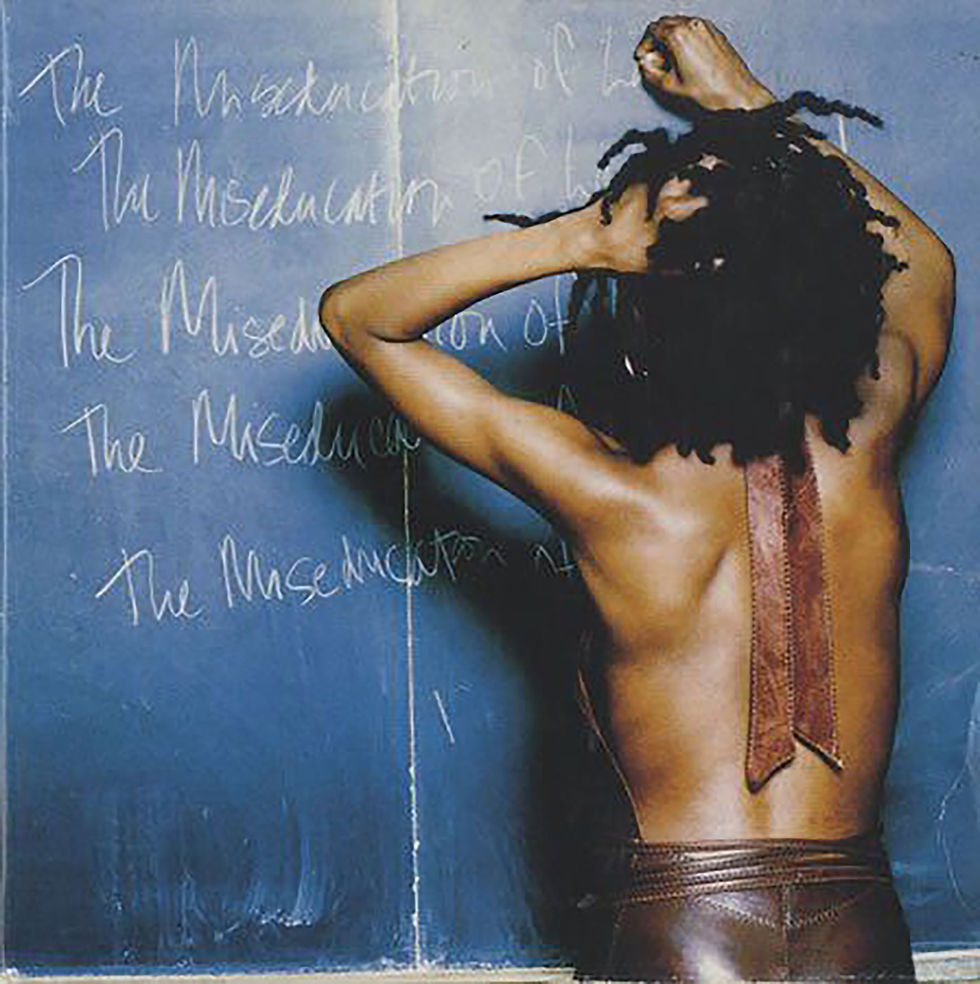
"But deep in my heart the answer, it was in me" — The Miseducation of Lauryn
While the world tried tirelessly to force its own version of Black girlhood on us, Lauryn
Hill gave us back our own reflection.
She reminded us that our softness was not a weakness and our sensitivity was not a
flaw. She held a mirror up to the parts of us we were taught to mute and said, "This is
yours, claim it." In a world that wanted us to shrink, she offered language for expanding.
She sang about love in a way that felt like prayer and protest at the same time, and she
taught us that healing could be loud, tender, raw, righteous, and imperfect. All while
being useful, intentional and necessary to our growth, our development, and our
elevation.
For so many of us, girlhood did not come with protection or gentle hands. It came with
survival assignments. It came with being strong too early and silent too often. But
Lauryn made space for our complicated upbringings. She showed us that brilliance
could have varying textures and that beauty could keep unfolding in ways we had never
been taught to expect. She made room for our questions, our contradictions, and our
unpolished feelings.
Most of all, she affirmed that Black girls are allowed to belong to themselves. To feel
deeply. To think critically. To be spiritual and skeptical. To be hopeful even while being
heartbroken. To grow beyond the messages we consumed as children. Her voice
carried freedom, and every note reminded us that we did not have to perform a version
of ourselves that the world preferred.
Lauryn gave us everything we needed to eventually understand that we did not need
permission to be whole. She taught me that the real journey is the one that brings you
home to yourself.
And because of that, The Miseducation of Lauryn Hill has never lived as miseducation
in my life. It has always been the teaching that met me where I was. The one that
carried me through all of my most breakable periods. The one that held my hand when
no other hands reached for me. The one that grounds me each time I return to it,
reminding me of my roots, honoring the woman I fought to grow into, and guiding me
toward the future my spirit keeps moving toward.
This album will always be home to me. Not because it taught me who to become, but
because it reminded me who I already was.


Comments