%20(1)_edited.jpg)


The Original Black Panthers Black Nationalism vs. Internationalism

An exploration of Black nationalism, diaspora unity, and the dilution of purpose in modern movements

The 1960s brought its own contribution to the vestige of Black Nationalism today. The contributions, sacrifices, losses, and even death paid their dues. This inspired the establishment of several revolutionary movements and formations. In that time, most of the foundational members were young, no more than their mid 20s. Huey himself was 24 when he and Bobby Seale met on the campus of Merritt College. There they identified a need, and together formed a solution. What may have begun with small, genuine intentions would go further to change the world forever.
Today, Huey P. would be 84 years old. Bobby still graces us as an elder at 89 years of age.
The things they have witnessed, the people they have seen come and go, whether from the movement itself or from time, leave an archive of legacy. Though Bobby and other elders remain the only eyewitnesses of history, they are seldom taught publicly. These accounts must be documented, recorded, and analyzed. We learn from the experiences and the mistakes, the good as well as the bad. This is the gift the ancestors leave us with, as long as we are willing to look. To search, and to search within ourselves, not to compare, but to assimilate. This is the purpose.
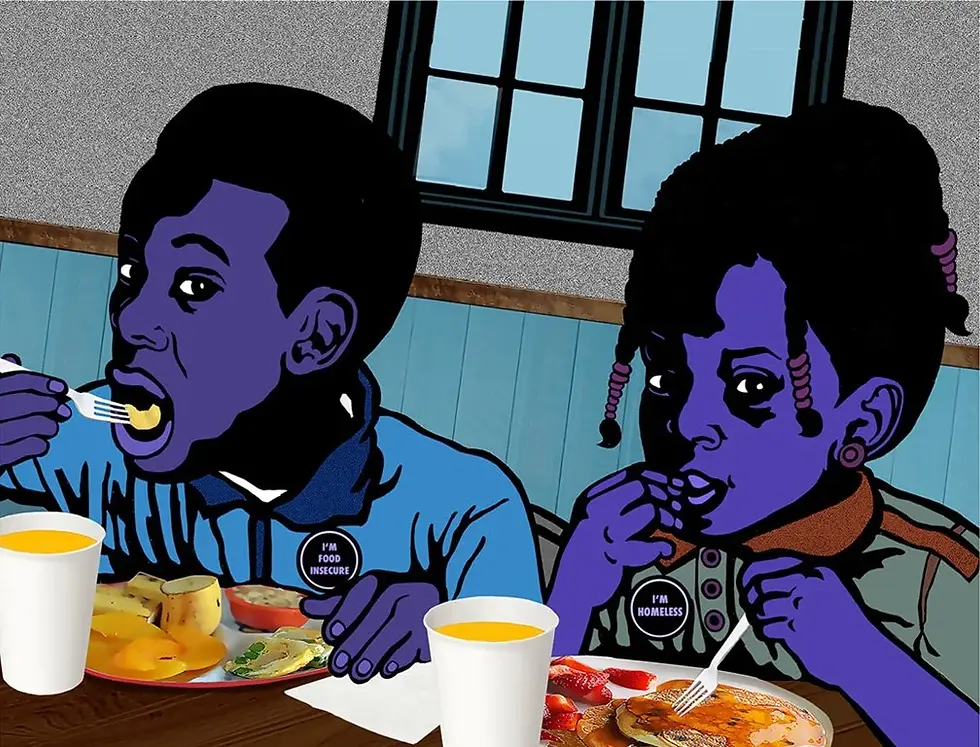
Often, the Original Black Panther Party is labeled as the touchstone of internationalism. Groups who face different oppressions still use its structure and examples as a blueprint. By no means is this a bad thing. With their 12 point establishment and free communal programs, this indeed is a blueprint. The Panthers established services such as the free breakfast program for children, free pest control in rodent infested communities, and free rides for families visiting incarcerated loved ones. These are ideal assistance systems that would be a necessity in Black communities today.
The question arises, whose blueprint. Who was this blueprint established for, and how has that paradigm changed. Was, or even is, the intention for the Black collective to pursue liberation and self sufficiency within an internationalist umbrella. Or was the goal for we, the people, to free ourselves internally.
The central orthodoxy that the Original Black Panthers were internationalist saturates their core meaning. It blurs the truth that they, and we, have always been for our people by our people. In truth, the layout of our ancestors,
bound by melanin, should remain internally focused, not allowing the substance to wane.
Root Words

The irony of having our own platforms. I will not take too much time breaking down European definitions of internationalism vs Black nationalism. What I will do is break down the root acknowledgements and where they serve here.
Internationalism serves as a unification of nations, a collective purpose meant to serve all. But who is all? All is a broad category that can both benefit and harm depending on the purpose. All oppressed groups indeed face oppression in some form. Yet within that, Black collective solutions and agendas are often placed secondary.
Black lives matter when the internationalist collective comes to protest, but blind eyes or selective awareness appear when our youth harm one another. Multiple flags fly alongside the BLM flag in supposed unity, yet some have nowhere near our intentions. Their agenda is not akin to ours. You may witness those who do not look like us speaking for us or on our behalf, as if we seek a savior that already lies within our own understanding. The audacity remains that those who have never had to defend the melanin Garvey called gold assume they can relate to the point of decision making.
Black unity should not be redefined as internationalism. The diaspora is exactly that, a collective of nations from Mother Africa, to Indigenous Blacks, to the Caribbean,
through melanated Australia. We share a connective tissue that often places us in similar positions of oppression, defending our land, our property, ourselves from being property, and our bloodline. This binds us under Garvey’s blood.
As internationalism gains traction, it begins to group workers rights, feminism, communism, and socialism under the same umbrella. This distinction must be made clearly. Even the steel worker in the mill is treated differently because of his skin color. Pursuing equality with those who do not subconsciously see your value equally has no clear end.
Friendship is one thing. Everyone has friends, some genuine. But there should be no issue with wanting the best for your people above all. Take a breath, hold it, and say we deserve that. I deserve this. So does my family and bloodline.
Who Are the We in Context
“In 1966 we called ourselves a Black Nationalist Party.” Huey P. Newton
Huey P. Newton, a young brother at Merritt College, was filled with ambition and on a path of self discovery. He participated in several action groups such as the Afro American Council and the Soul Students Advisory Council. This is relatable, when one seeks change, they gravitate toward work already being done. Many today who associate with Black nationalist ideals were born from social movements, whether Civil Rights, BLM, or others. When you search deeply, we often funnel back to Garvey’s viewpoint, that it will take all of us together to bring the change we need.
This became the mindset of Huey P. Newton and Bobby Seale. Actions were occurring politically and socially, often in the form of presentations, but what was the real agenda for the Black neighborhoods surrounding them. For the elders, the families, the community.
What was the end goal?

In October 1966 in Oakland, California, the Original Black Panther Party was founded. The objective was clear, prevent police brutality in Black communities, normalize Black self defense, and provide basic life resources to the community. Neither Huey nor Bobby claimed they needed to protect everyone. Their priority was their own people.
The truth was clear. People who looked like them needed solutions that would never come from a system built on its own agenda. To deny that this commitment to the tribe proves Black liberation as the foundation is to ignore the obvious.
In relation to today, this is why Black turnout is often low when movements are not both Black led and Black focused. Seeing 500 people at a protest for Black lives with only about 30 percent being Black reflects an internationally saturated agenda. The question remains, where is our tribe. Is this for me?
In a culture already driven by trends, there can be no true education before alignment is firmly set.
Like Huey, known as a gentle soul with a militant mind, he studied systems that restricted basic humanity. It became clear that the Black diaspora was not the only casualty. This awareness led to alignment with others facing similar struggles and restrictions.
But like many gentle souls over time, Black people have always desired a basic, decent humanity. The boundaries of conditional inclusion softened. Eventually, the Panthers were no longer the majority presence in our own communities. Diluted versions of their sacrifices, purpose, and mission became popular. Others adopted the blueprint and aligned it with their own agendas. While not harmful to them, it became a slow internal leak of our collective purpose.
Trial and Error
The Original Black Panther Party imprinted influence on several other groups fighting oppression. Noticeably similar groups such as the Young Lords and Brown Berets embraced the blueprint, applying this stance to their communities and uniting around common causes. In this case, the purpose does not necessarily become saturated but rather replicated toward their own intentional goals. These organizations today stand as positive legacies. Yet in truth, though there is no ill will in their intentions, their priority as a whole is not the Black community or the needs of our tribe.

Conversely, these were not the only contributions laid in structure by the party. Black women made up nearly 60 percent of the membership. Despite the systematic maneuver to remove the Black man from homes and from the family social structure, Black women remained and are still our greatest, and often our only, ally. When they showcased their ability to lead, organize, and fight, the strength of their will was quickly categorized under the broader feminist movement. They were placed alongside many women not of color who today feel they relate to the same oppression while forgetting their own role in it.
In truth, Black women have always showcased strength and resilience throughout history. The Black father and family owe their very existence to this will to survive. Had the women not stood tall behind Toussaint, there would be no victory in Haiti. This is the only mindset we must proclaim, that Jakwani, the sacred duty of protection and preservation of our matriarchs, preserves our very existence.
So when feminism places all women in the same confinement as Black women, the dilution is real. The separation between Black men and women is then given rhetorical reasoning. Like weak seasoning, there is no soul in this pledge that is often grounded in modern day internationalism.
Make no mistake, this does not lower the value of our women or their need for equality and liberation in all aspects. It strengthens the viewpoint. Black women, before their counterparts, are the most targeted victims of oppression. That should take top priority for us as the collective before anyone else.
Thomas Sankara explains it best, “The revolution and women’s liberation go together. We do not talk of women’s emancipation as an act of charity or because of a surge of
human compassion. It is a basic necessity for the triumph of the revolution.”
Before his statement can be misconstrued for other agendas, the context must be clear. Black women. This stance holds the collective to a duty, one which we understand without outside influence or distraction. In wanting every member of the diaspora to feel this value, the narrative must be guarded. Black nationalism is not about the effort of patronizing other circles of the oppressed, but about keeping our safe space the priority. This alone invites others to join good causes.
Fred Hampton contributions set the example of what massive unification was capable of doing. Many argue that his ability to unite multiple oppressed groups heightened his targeting of cointelpro. This stands true in general, there was and is resistance against those unifying the collective for a greater purpose. The formation of the Rainbow Coalition publicly showed that differences could be placed aside to focus on the battle of classism in general. It was at this moment the Young Lords, Brown Berets, Young Patriots and others stood in solidarity declaring a united stance against systemic discrimination. That was and is a staple used today as an example of internationalism. Even today you see subsets of the Rainbow Coalition.

Ironically, Jesse Jackson initiated the Rainbow Coalition across the political agenda in efforts to bring collective votes in large numbers, forming a “multicultural” coalition.
When have the concerns and demands of the Black collective ever been placed as the main priority in any of these, in particular voting. We have become the trend of settling our vote for scraps of the reaping table. Respectfully, our elders have normalized this for too long.
Though the Rainbow Coalition still stands today in ethos, the Young Patriots are nearly extinct. Some Black nationalist may even claim there were other agendas from the start. This is not to say that the goals do not align in some way, nor that there are not some genuine hearted motives in such cases. However, this is not a reason to bend our stance, rely on others, and trust despite seeing a visual history of the latter. These rainbow coalitions are concerned with class when it concerns them, but youth violence, the viability of the Black family itself, the financial ability to even exist as a collective with land, equity and institutions does not appear on the road map. We are on two different paths in the end state.
In stark contrast, Fred Hampton exemplified one of the strongest examples of Black nationalism, which should take precedence over his contributions to the Rainbow Coalition. His ability to unite the street tribes such as the P Stone Rangers, Vice Lords, Disciple Nation and more. This power, the ability to stop alternative agendas amongst our own collective when killing each other had become the norm, is needed today beyond any coalition. What Fred Hampton and Jeff Fort, the leader of the Black P Stone Rangers, accomplished is key to literally stopping the Black genocide today. The two reestablished identity and responsibility to Black men in their community, no longer looking at their community for what they could take but what they could give. Obligations urgently needed now. The ability to come together, sit down as men, have a conversation without exterior influence. In this we will see that as the collective we have much more in common than our differences.
These operations were targeted and dismantled. Jeff Fort, Larry Hoover, key roles that could literally slow down and open the minds of the young men who slaughter each other in the name of hoods they do not own, sit behind prison walls with life sentences. Held more so not because they haven’t served their time to “society” but to prevent the influence of sparking unity again. Understand this is not only needed, this is mandatory today. Before focusing on any other group, we have our own house to clean, our own youth to save, our own fight. It is ok to realize the priorities. It does not make us selfish as the internationalists may argue. It makes us selfless, willing to give to each other in the sacred brotherhood and sisterhood.
The remnants of today
They say history always repeats itself. Whether or not that is fully true, the patterns remain. Internationalism today is a commercialized act of revolutionary practice in self, similar to Black nationalism. Before there were cameras, social media, and the pretense of titles, the work came with consequences, with little reward and recognition. Huey P. Newton would have had millions of Instagram followers, yet he passed away ostracized with few friends and little equity. On both sides this is the accountability we must learn from, because the sacrifices of our liaisons must be shown appreciation long beyond their lifetime, as a country does for its forefathers.
One of the largest movements for Black people was never led by those they advocated for. In the time of the Black Lives Matter movement, most of the momentum was not pushed by those of melanin, and the main agendas almost never accounted for the Black community that was not out there with signs and megaphones. Optics became energy, but not controlled energy, energy going in every direction without a single purpose. This became the pure, nondebatable realization regarding Black nationalism, that there must always be an end goal. Before urging us to unite with others, we as a people must first forgive, humble ourselves, and agree to be on the same page. There can be no comrades in our purpose. We are one collective not only by being under oppressive states, and not by the welfare of our individual class state. We are one by the melanated DNA housed within our Bloodline.
Today, Black nationalism stands at the verge of the unknown, in word and in action. The Black collective placing differences aside and working together in whole is looked at as abnormal. If someone was to say Black Power in a school board room, they would receive awkward stares, ridiculed by their own peers. If the Christian church, Nation of Islam, and atheists performed collective work in their community despite their religious differences, history would state they witnessed an anomaly. The prototype has changed, thinking to adopt the practice of unity as working with others instead of working within. Often moving backwards, this is the same as trying to walk up an escalator that is going down. We cannot advocate for unity in any aspect and not exemplify it at home.

Home is the collective, not a physical destination, not Mother Africa, not the Moorish Nation, nor Indigenous tribes. These arguments of where the collective derives take none of us in motion going forward. Our holy grail would be the moment the collective chooses each other first, before religion, before political beliefs, before affiliations in all. This would and will be the rebirth of Black nationalism. This is today, Tanari.
Tanari defends the unapologetic approach of Blackness and its priority. This word carries the bloodline of Shaka Zulu, Toussaint, Harriet Tubman, Malcolm X, and the names of the ancestors who dreamed for a better future for us in whole. The breaking of all barriers to make others comfortable, finding love, peace, and tranquility in who we truly are. The essence of Tanari is the reproclamation to each other, the proclamation to others that who we are is who we are indeed. Tanari does not request that you change your beliefs, it simply asks for your commitment to the collective.
To those who ask why this is the most important question, has anything worked so far?
Anything other than this level of solidarity are shortcuts that have proved to be unsuccessful in practice. This is the ask of you, no less than what others ask for their tribe.
For this to be placed into action.
May the ancestors guide and protect you always,


Comments