%20(1)_edited.jpg)


The Dark Lady Was Ours

Emilia Bassano, the silence forced on Black genius, and the truth that survives without permission

Sonnet 127
In the old age black was not counted fair,
Or if it were, it bore not beauty’s name;
But now is black beauty’s successive heir,
And beauty slander’d with a bastard shame:
For since each hand hath put on nature’s power,
Fairing the foul with art’s false borrow’d face,
Sweet beauty hath no name, no holy bower,
But is profan’d, if not lives in disgrace.
Therefore my mistress’ brows are raven black,
Her eyes so suited, and they mourners seem
At such who, not born fair, no beauty lack,
Sland’ring creation with a false esteem:
Yet so they mourn, becoming of their woe,
That every tongue says beauty should look so.
To the world, William Shakespeare’s work still sits today as one of the greatest artistic bodies of its time. As a child, Romeo and Juliet was one of the first plays we learned. I was in the advanced class, and our teacher announced we would be doing a play. Inspired by the art, still innocent to the world’s guilt, I immediately applied for Romeo. All to be placed regardless of skill into a “better fit” position. Or maybe it was the ancestors themselves, rather than the teachers and staff, that didn’t want me kissing a white girl. Because since then, my adoration for black women and self has grown, unapologetically.
But the art is still there. It resonated with me, along with other works. It felt communal, liberating. Almost as if a black woman was whispering from the forest, from her pen. Or Emilia Lanier, better known as Emilia Bassano Lanier to some.
If you google her, you will see portraits of an English woman in fine garments. But what does the research say? What do we tell in our story?
A black woman, far from the only one whose identity was silenced then, and is now more than ever. So it will never be retraced, so there will be no reckoning. She is proof of a pattern. Black artists, writers, geniuses have been erased, stolen from, and written out of our history.
This is her anecdote, and a testament to everything erasure represents.
Blood and Root
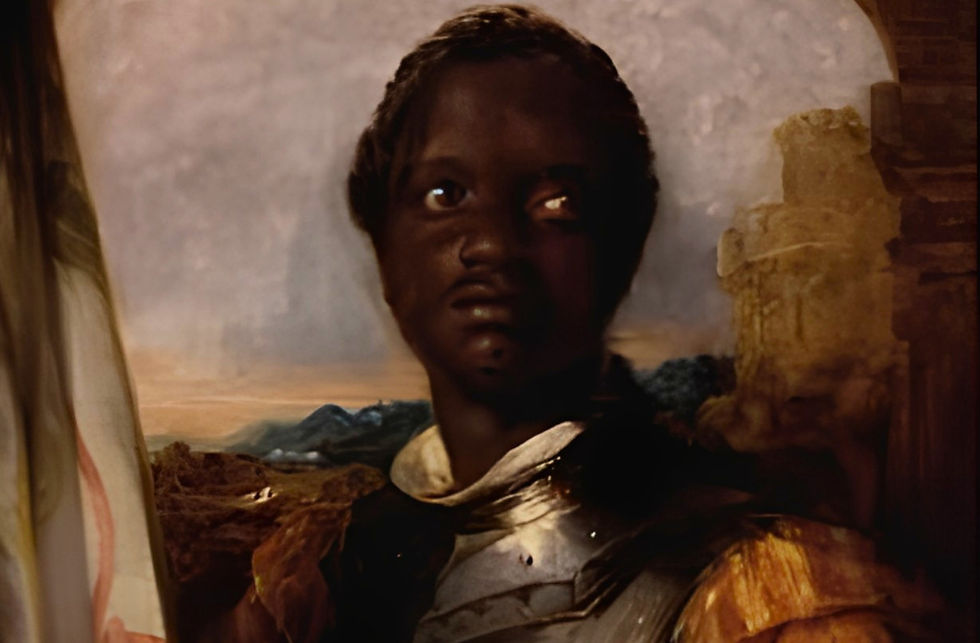
The Dark Lady was first named by historian A.L. Rowse in the 1970s, identified through Simon Forman’s astrological diaries, a title given to the woman behind Shakespeare’s sonnets. Before that title, before that theory, she was already one of the first published women poets in Europe: Emilia Lanier, better known as Emilia Bassano Lanier.
On her father’s side, the Bassano name carried strong prominence. Musicians to the Doge of Venice, the elected ruler of the Venetian Republic, a title easier understood as something close to a duke or a head of state. From that position they were recruited into Henry VIII’s English court, arriving between 1539 and 1540.
To understand where she came from, you have to go further back than Venice. The Berbers, self named Imazighen, meaning “free men,” are the confirmed Indigenous people of North Africa, present on that land since Neolithic times. Long before Europe drew its borders the way we know them now, they were people already rooted, already whole. We’ve seen this before. Free men. It’s a phrase that echoes forward, all the way to the free Black men of America centuries later, carrying land, carrying trade, carrying names. Almost if they associate the term Black, itself not to be “free”. Different continents, different centuries, but the same diaspora, the same thread pulled tight across time.
Jeronimo Bassano, of that same family line, was excluded and banned by the Catholic Church for Jewish practices.
This was not incidental. Melanated people across Europe during this era were often described, and called, Moors. A 2009 study published in The Oxfordian, a peer reviewed journal of Shakespeare authorship research, states that the Bassanos, upon arrival in London, were described in contemporary records as “black,” and may have carried Moroccan ancestry alongside their Jewish roots. That is not speculation pulled from nowhere. That is their documented history, standing on record.
So place her at the center of that circle. A Black woman. Jewish. Three identities that, on their own, each carried the weight of erasure in that era. Together, we have to hold real accountability to what that meant for her. If her art existed, the practice of showing it, of surviving with it, meant it could not walk into the room casually unguarded. If it had to be shown, it had to be shown in a mask.
The Man Who Never Left
There are no documented accounts of Shakespeare ever leaving Stratford. No diary, no letter, no ship’s log, no foreign record places him outside of England, not once, not ever.
Yet lay the plays next to that fact. A third of his work is set in Italy, and not in broad strokes. The correct inland waterway route from Verona to Milan. Accurate Italian marriage law woven into The Taming of the Shrew. A precise, geographically correct setting behind Twelfth Night, built on the real port city of Ragusa. Political details are exact enough to know that Padua sat under Venetian protection while Mantua did not.Where do these accounts come from, without foundation?
How many black women’s stories are told across the world by people who do not look like them, who have never lived them, who could not have written them from where they stood.
Let that contradiction breathe. Someone wrote this with real knowledge. It was not him. Not everything can be studied. Some things must be experienced. But the colonizer has always taken what was stolen from black culture, black history, black experience, and dressed it up as their own research. Emilia Bassano was the one who actually had that knowledge, that access, that lived Venetian world. Not borrowed from a merchant’s secondhand story in a London tavern. Lived. Carried in her own blood.
Experience cannot be disguised. It cannot be hidden behind another name, folded into someone else’s signature, dressed up or handed off. Somehow, it will always tie back to the originator.
Black women have often written behind walls. Phillis Wheatley moved men to praise her verse before they ever learned the poet was black, her words doing what her presence in the room could not. Ida B. Wells documented the harshest crimes of her time with words, not noise, turning lynching into evidence the world could no longer look away from. Different centuries, different pens, but the same wall standing between a black woman and the credit her work deserved.Emilia Bassano’s resilience sits inside that same lineage.
No woman performed on the English stage until 1660. No woman had a real path to playwriting credit. That door simply did not exist for her. Add to that the fact that Jews had been expelled from England since 1290, not legally allowed back until 1656, yet a hidden crypto Jewish population persisted the whole time, including through the exact years the Bassanos arrived in London. For her, concealment was not a choice. It was survival.
But she still wrote. In 1611, Emilia published Salve Deus Rex Judaeorum, becoming the first Englishwoman to publish a volume of poetry seeking patronage under her own name. Proof that when the door cracked open even slightly, she did not just write, she wrote boldly, and she put her name on it. No mask at that time. No hiding behind another hand. Just her own, in a world that gave men every reason to take it as theirs.
Some will read all of this and ask for evidence that fits their idea of proof. But black culture has been colonized since ancient times, and the artifacts taken from us still stand today in European museums, catalogued under someone else’s ownership. I have witnessed how the facts themselves can be corrupted, and passed down as truthful accounts by eyes that do not look like us, that were never meant to carry our ancestry with care.
So this is a historical record, blended with ancestral alignment. And that alignment will always bring forth truth and sincerity, even where the paper trail was never allowed to survive.
History has shown, and will continue to show, that the more we recover, the more comes to light. The black gods we learn. The tombs we explore. Truth does not require permission to exist. It only requires someone willing to dig.
.
Her Language, His Hand
So let’s dig into the words themselves
Read her words next to his, side by side, and the echoes stop feeling like coincidence.
She leans on “did” as emphasis, did wash away, did plead for love. Open the plays and that same rhythm sits inside line after line, a metrical habit few writers of the era carried the same way.
Then there’s Eve’s Apology, her extended defense of women written into the same collection. It speaks in the language of scripture, a Passion narrative recast through a woman’s eyes, sin and redemption reworked around Eve, around Pilate’s wife, around every woman scripture blamed and never let speak for herself. That same instinct runs through Shakespeare’s women, Portia arguing mercy in a courtroom, Isabella pleading for a brother’s life against a corrupted judgment, women speaking scripture back to the men who weaponized it against them first.
She writes women defending themselves against blame that was never theirs to carry. So does he. Lady Macbeth’s unraveling, Hermione’s endurance, Cleopatra’s refusal to be reduced to spectacle even in death, women given interior lives most male writers of the era never bothered to imagine.
Some may call it means. Some may call it motive. Love’s Labour’s Lost, Much Ado About Nothing, The Merchant of Venice, Hamlet, Othello, Antony and Cleopatra, all carrying a hand that moves too much like hers to call coincidence.
She asks questions inside her verse that demand an answer the page cannot give. Shakespeare’s women do the same, Portia’s questions of mercy, Isabella’s questions of justice, questions aimed less at the men on stage and more at the audience watching.
Her family carried Venice inside their blood, the language, the geography, the law, the trade. That same Venice sits inside The Merchant of Venice, inside Othello, drawn with a precision no man who never left England should have carried.
None of this alone proves a hand.
Together, it stops reading like a chance.
Black women have always been the keepers of the story. Our grandmothers did this work long before any of it touched a page, and the Gullah Geechee carried that same thread, keeping a people whole through nothing but voice and memory. Emilia simply carried that energy into ink. What our grandmothers spoke, she wrote. Same gift, same lineage, just a different vessel to hold it in.
Let’s be honest about where this stands. No signed manuscript exists.
No confession survives in an archive. The theft cannot be proven the way a court would demand it proven. Those are real gaps. Though, The reference of skin and melanated must be boldly investigated and claimed in our ancestral recoveries of contributions in the Elizabthean era.
What survives is a pattern too consistent to be nothing, a woman with the language, the access, the wounds, the motive, and the silence forced onto her by a world that had every reason to erase her and take credit for what was left behind.
Named for What It Is
So let’s call it what it may be.
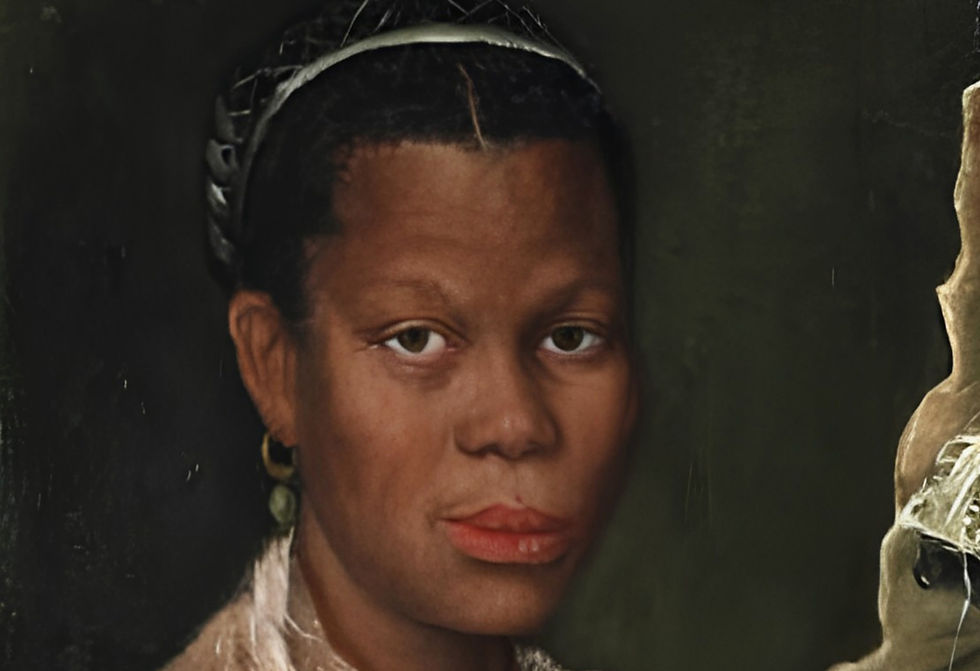
Irene Coslet, in her 2026 book, The Real Shakespeare: Emilia Bassano Willoughby, does not soften her language. She calls the man from Stratford an uneducated interloper. A semi illiterate moneylender. She says plainly that his work was stolen.
Colonization has never needed a confession to take. It took land without deeds. It took names without asking. It took bodies, labor, language, story, and called the absence of paperwork proof that nothing was ever owed. So when the question comes, where is the documentation of the theft, the answer sits inside the same history that made documentation impossible for people like her in the first place.
To be honest, Coslet herself admits she cannot prove exactly how the theft happened. Mainstream voices call the case circumstantial. No smoking gun. No confession sitting in an archive waiting to be found.
But absence of proof is not absence of truth, especially when the system itself was built to erase the proof before it could ever exist. The means were documented. The motive was documented. The influence sits inside the pages themselves, plain to anyone willing to read closely instead of comfortably. A system built to make theft invisible does not need evidence to still have conviction.
Few people know Katherine Johnson’s name the way they know the mission she saved. Her calculations sent men into orbit and brought them home again, and for decades the world moved on without knowing whose mind did that work.
Emilia’s story sits inside that same pattern, centuries earlier.
More Than the Theory
But strip away the theory for a moment. Strip away the sonnets, the theft, the credit given to someone else’s name. At the center of all of it is a woman who loved to write.
Whatever fame the work carried under Shakespeare’s side, that was never hers to chase. Pen to page, in a time built to keep her silent. A voice finding beauty anyway, and putting it down where it could not be taken back once it existed. Defiance, dressed as art.
And she is far from alone in that fight.
How many other black artists, writers, musicians, and thinkers had their work absorbed into someone else’s name, credited elsewhere, or never recorded at all, because the systems around them were built to make that erasure permanent and impossible to trace back. Not by accident. By design. A world that benefits from forgetting has no reason to remember correctly.
This is not just about one Renaissance woman and a set of sonnets. This is about who gets remembered in history, and who gets reduced to a footnote beneath someone else’s name. Emilia Bassano is one name recovered. She will not be the last one owed that recovery.
May the ancestors guide and protect you always


Comments